Eating in Romagna:
what to look for, and what isn't true
Below are the correct names, the real designations and the months when things actually happen. Including two or three things people always say that the product specification contradicts.
The piadina, and the mistake everyone makes
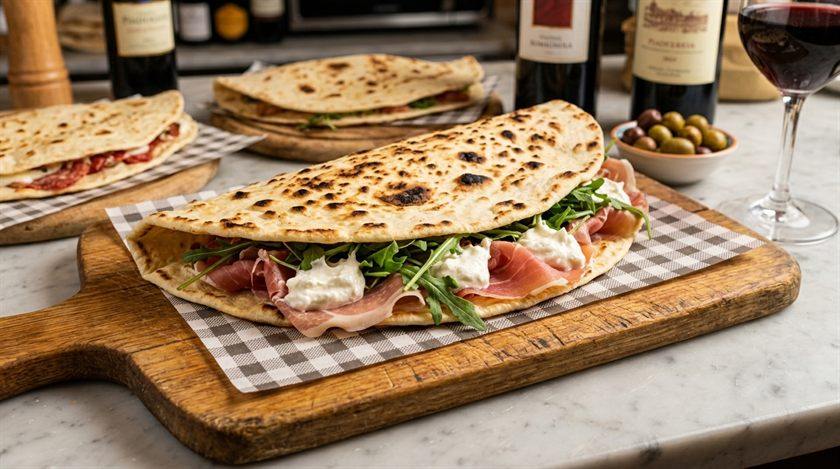
The Piadina Romagnola IGP has been protected by the European Union since 2014. The product specification states what it may contain — flour, water, salt, lard or olive oil — and what it may not contain: preservatives, flavours, additives. In 2018 a European court ruled that it can only be produced in Romagna.
Here comes the part almost nobody gets right. The recognised types are two:
- Piadina Romagnola — diameter 15-25 cm, thickness 4-8 mm, compact and crumbly, with small spots from cooking;
- Piadina Romagnola alla Riminese — diameter 23-30 cm, thickness up to 3 mm, soft and flexible, with large bubbles from cooking. The wording «alla Riminese» must appear on the label.
You'll hear everywhere that the two piadine are "the Riminese" and "the Cesenate". The word "cesenate" does not appear in the specification. There is only one variant with a geographical name, the Riminese; the other is simply piadina, and as it happens it's the thicker one eaten around here.
Giovanni Pascoli — who is from San Mauro Pascoli, 7 km from here — called it "the national bread of the Romagnoli".
Two cheeses that come from nearby
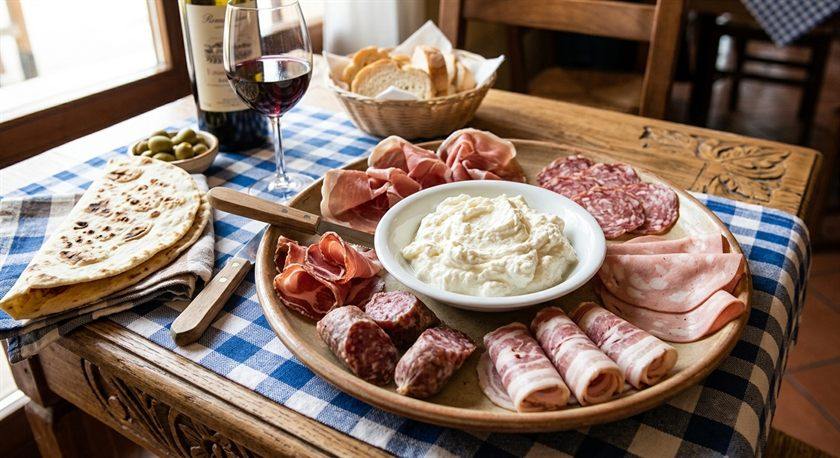
Squacquerone, made seven kilometres from here
Squacquerone di Romagna DOP has been protected since 2012. It's fresh, soft, creamy, made from whole cow's milk, and matures from one to four days: that's why, eaten here, it has nothing to do with what arrives elsewhere after days of travel.
The dairies authorised to produce it are six in total. One is the Caseificio Pascoli in Savignano sul Rubicone: seven kilometres from here. Another is in Cesena.
In piadina with arugula it's the classic filling. But the thing to do, if you have a kitchen, is buy it and eat it simply with bread.
Formaggio di fossa, opened in November
Formaggio di Fossa di Sogliano DOP (protected since 2009) is produced in Sogliano al Rubicone, 21 km away. The name is literal: the wheels, sealed in cloth sacks, are lowered into flask-shaped pits carved into the sandstone — narrow at the top, wide at the bottom, up to seven metres deep — after the pit has been sterilised by burning wheat straw inside.
They stay down from 80 to 100 days. The opening is sealed with a wooden and gypsum lid. At the sfossatura it's reopened with chisel and mallet, and the pit must be aired before anyone can go down.
The traditional date of the sfossatura is 25 November, Saint Catherine. And that's why the Fiera del Formaggio di Fossa in Sogliano takes place on three Sundays between late November and early December — it's not a continuous event, they are three separate days.
There are three versions: all cow's milk (the most delicate), mixed, all sheep's milk (the most intense and piquant).
And the salt of Cervia
The artisanal sea salt of Cervia is a Slow Food Presidio. It's harvested by hand in the Camillone salt pan, every five days, with a method found nowhere else in Italy. It's called "sweet" because the water it comes from never exceeds a certain concentration, so it doesn't accumulate bitter salts.
Pasta: cappelletti, passatelli, strozzapreti
Cappelletti are not small tortellini
It's the most common confusion, and the difference is in the filling. The tortellino bolognese is meat-based: pork loin, prosciutto, mortadella. The cappelletto romagnolo — in dialect caplet — has a cheese base: ricotta, or half ricotta and half raveggiolo, with capon breast, Parmigiano, eggs, nutmeg and lemon zest.
They are two distinct registered traditional products, from two different provinces. A document from the Prefect of Forlì in 1811 recorded consumption of four hundred or five hundred cappelletti per person.
Passatelli are a winter soup
Breadcrumbs, Parmigiano, eggs, nutmeg and lemon zest, forced through a perforated iron. The proportions between bread and cheese used to change with the family's means: more cheese, more prosperity.
Traditionally they're eaten in broth, and on special occasions: Easter, Ascension, baptisms, confirmations, weddings. At Christmas they're replaced by cappelletti. The dry versions, now widespread, are a recent invention.
Strozzapreti have no egg
Just flour and water, in the basic version: strips of dough rubbed between the palms until they become small grooved fusilli. It's poor people's pasta, and indeed it stands up to strong sauces.
Not to be confused with stricchetti, which are something else: rectangles of egg pasta pinched in the middle, served in broth or with ragù and peas.
Fish, and how the market works
The names you hear at the market aren't the ones in cookbooks:
- Poveracce (puracie) are clams. The name comes from a local saying: poor is the one who catches them, poor who sells them, poor who buys them, and poor who eats them.
- Sardoncini (sardun) are anchovies.
- Saraghina is a small oily fish that in the Mediterranean lives almost only in the northern Adriatic. It's cooked sora al test: you heat the terracotta griddle, scatter coarse salt on it so it doesn't stick, and take the little fish by the tail three at a time, dusted with cornmeal.
- Canocchie, mazzole, paganelli: the rest of the mixed catch for frying.
The rustida is a grill of oily fish with a light breading of breadcrumbs, parsley, garlic and oil, which forms a crust and protects from the heat.
The Cesenatico fish market
It's a real fishing port, with about 1,500 tonnes a year. The auction is run downwards: the auctioneer starts from a high price and counts down, and the first who stops him with a sign takes the lot. In the electronic auction one crate passes every three to five seconds.
But it's reserved for professionals: you can't go in. If you want to see it there are two chances a year, when the market opens to the public: "Azzurro come il pesce" in spring and "Il pesce fa festa" in early November.
Wine: Albana and hillside Sangiovese
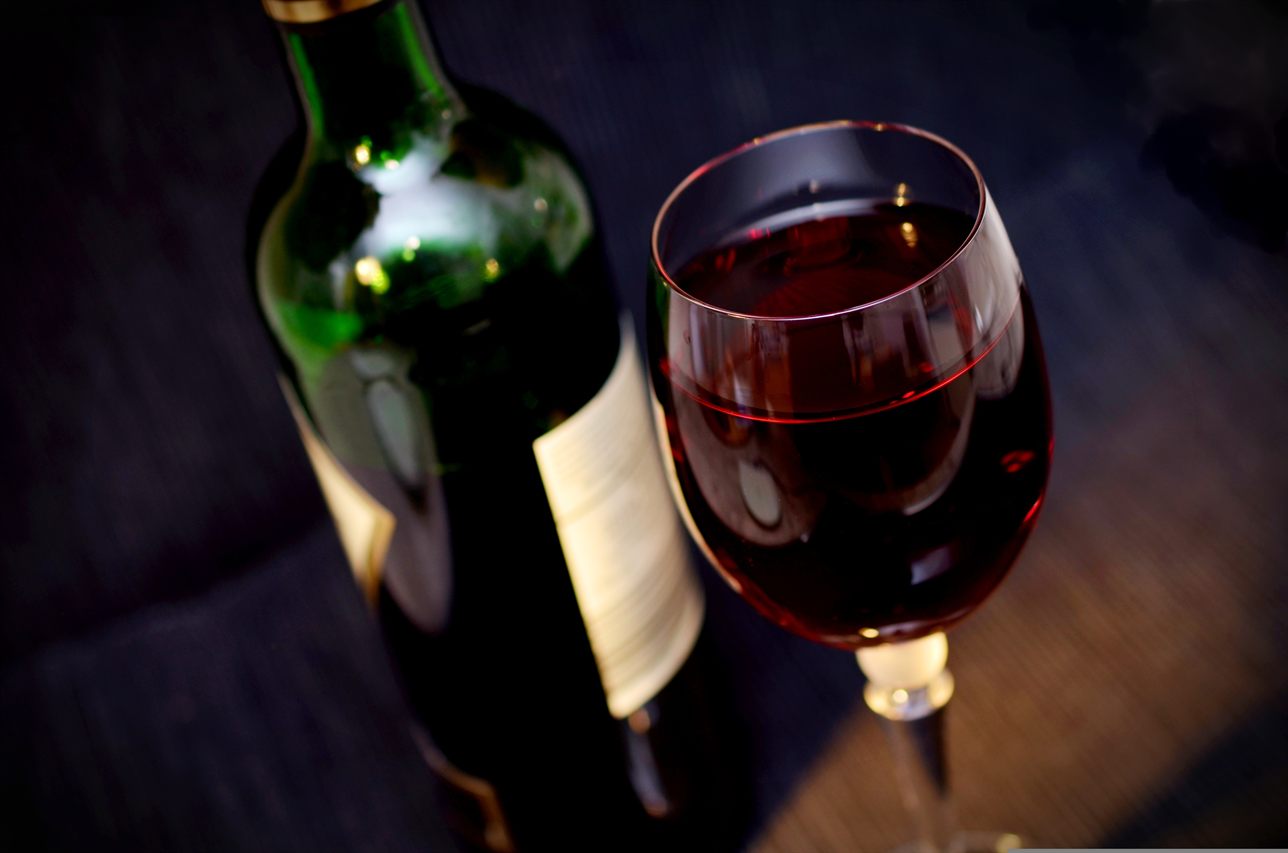
Albana was Italy's first white DOCG, in 1987. Today it's called Romagna Albana and comes in four versions: dry, off-dry, sweet and passito. To be fair: that recognition was contested at the time, and some still consider it a decision more political than technical.
Romagna Sangiovese DOC has sixteen subzones, and two are right next door: Longiano (11 km) and Cesena (16 km). The Consortium describes the hills of Longiano as "huge terraces overlooking the sea", and it's an honest description: you can see the coast from up there.
The other two to try, because you won't find them outside here: Pagadebit (Bombino Bianco grape — the name comes from the fact it was so reliable it paid the debts) and Cagnina, red and sweet, drunk very young with chestnuts.
The desserts nobody knows
Everyone knows ciambella. These three don't:
- Bustrengo — a farmhouse cake born to avoid wasting stale bread: breadcrumbs, flour, eggs, milk, raisins, walnuts, lemon zest. It changes from valley to valley: with chestnut flour in Valmarecchia, chickpea flour in the Uso and Savio valleys. There was also a savoury version, with cheese, which counted as a meal.
- Latte brulé — milk, eggs, sugar and a dark, almost bitter caramel. It was made for first communions, confirmations and weddings, and only in families who could afford it.
- Savòr — it's not saba. Saba is grape must cooked down to a third. Savòr is a compote of quinces, pears, figs and walnuts boiled in that must for four or five hours. They're constantly confused.
If you want to spend well
Within twenty-five kilometres there are five Michelin-starred restaurants. The closest is also the most awarded:
Michelin Guide Italy 2026. It's best to book well in advance, especially in August.
The calendar of what to eat
Why you need a kitchen
Squacquerone is made seven kilometres away and lasts four days. Fish is bought where they catch it. The market in Sant'Angelo is on Wednesday morning, the one in Cesenatico on Friday.
In a home with a real kitchen — oven, gas hob, dishwasher — you eat all this. In a hotel room you watch it go by.
Designations verified in August 2026 on the registers of the Regione Emilia-Romagna (DOP, IGP and traditional agri-food products), on the Consorzio Vini di Romagna and on the Fondazione Slow Food. The stars are those of the Michelin Guide Italy 2026. No prices: they change. Event periods are the recurring ones, not the dates of a single edition.